
Author · Founder of Thought Academy
Ideas that help us
think more clearly reclaim reasonbuild better livesimprove civilizationand live more wisely.
Gabriel Wilensky is a writer and entrepreneur focused on critical thinking, human progress, and the practical application of reason. Through his books and Thought Academy, he explores how better ideas can improve both individual lives and civilization.
About Gabriel
Gabriel Wilensky is a writer, entrepreneur, and founder of Thought Academy. His work focuses on critical thinking, human progress, and the practical power of reason.
He believes that clearer thinking is one of the most reliable paths to a better life and a better civilization. Drawing on Enlightenment values and a commitment to individual reason, his writing and educational work explore how better ideas can help people live more deliberately and resist the forces of irrationality and conformity.
Through his books and Thought Academy, he examines the ideas that shape both personal lives and societies. His work is informed by decades of experience building products used by tens of millions of people, alongside a long-standing interest in philosophy, history, and human thought.
He is the author of Fuel for Thought, Primordial Soup for the Mind, Six Million Crucifixions, and other works. He is currently completing How to Fix the United States, a book that applies Enlightenment principles and clear reasoning to the challenges facing American society. He lives in Italy.
Books
A selection of works on critical thinking, human nature, history, and the ideas that shape civilization.

How to Fix the United States
An Instruction Manual for Restoring Reason, Rights, and Limited Government
Forthcoming
A reasoned examination of the forces shaping the United States and a practical path toward restoring the principles of limited government, individual rights, and clear thinking.
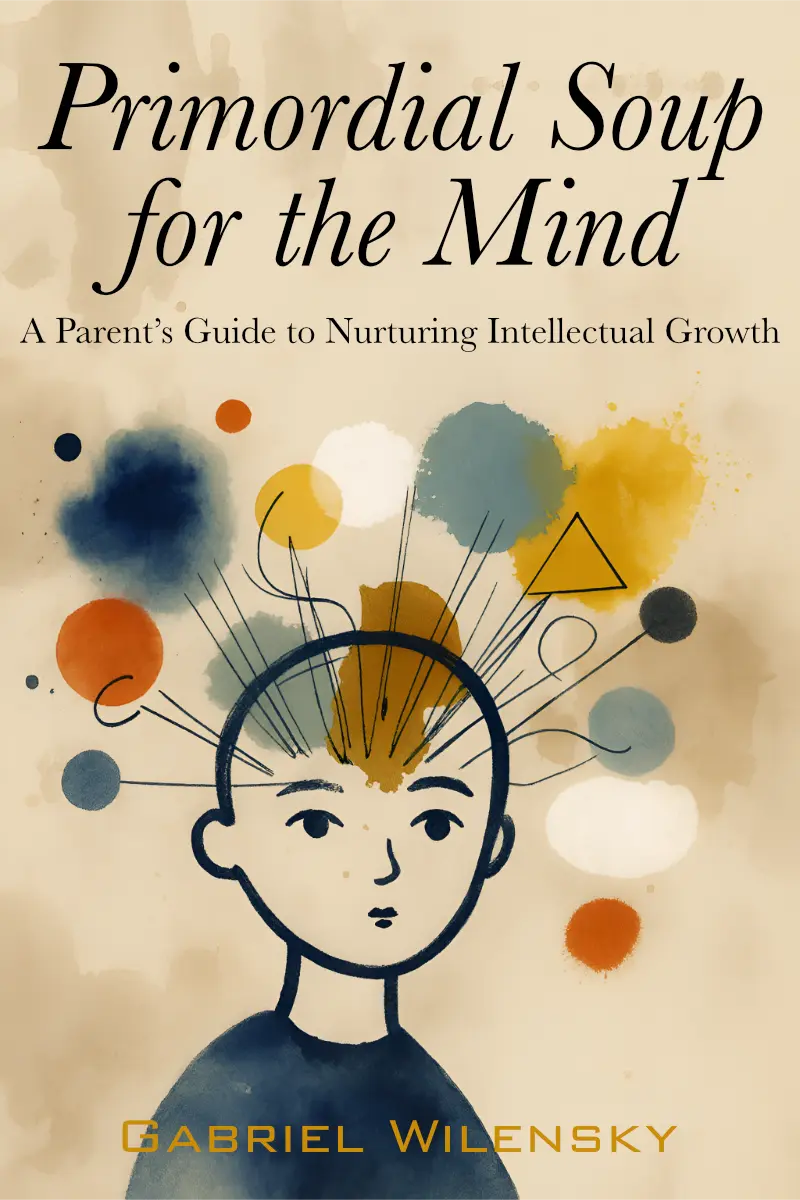
Primordial Soup for the Mind
A Parent’s Guide to Nurturing Intellectual Growth
Practical guidance for raising children who can think clearly, independently, and with intellectual courage.
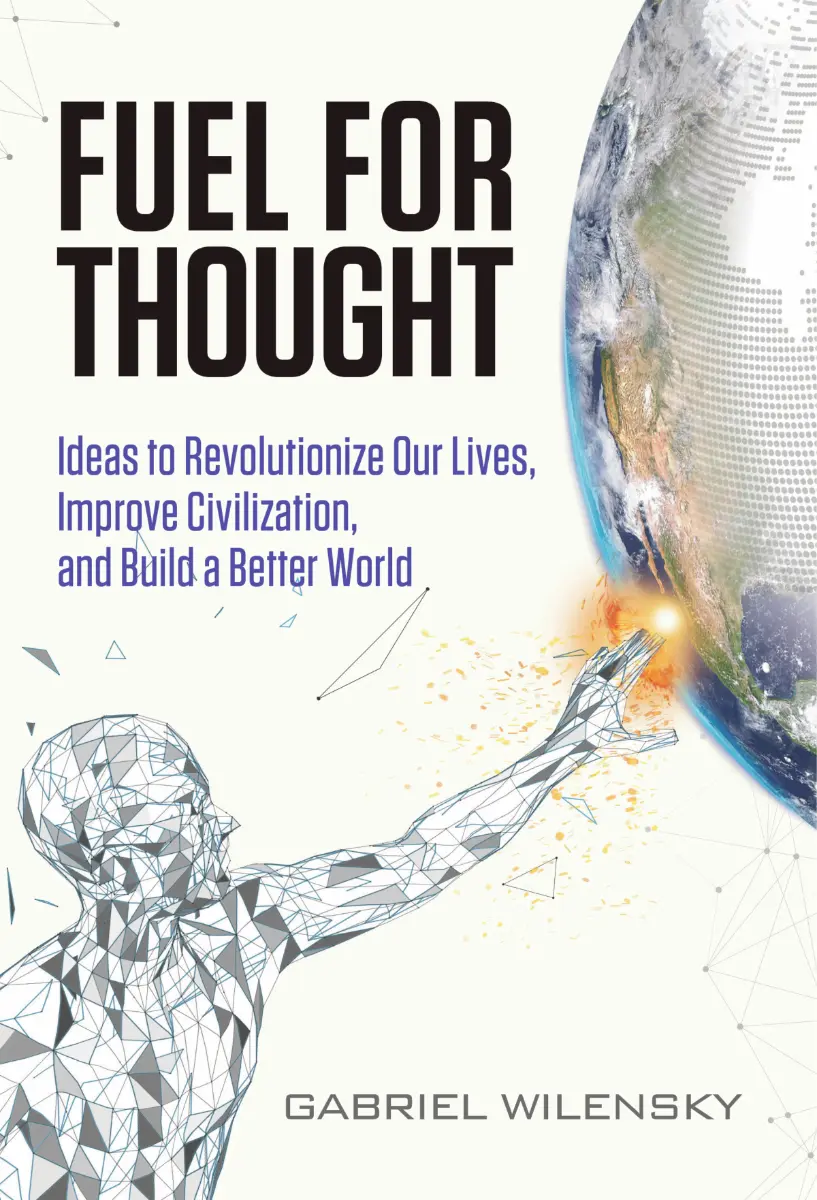
Fuel for Thought
Ideas to Revolutionize Our Lives, Improve Civilization, and Build a Better World
A collection of powerful ideas aimed at clearer thinking, personal growth, and the improvement of society.
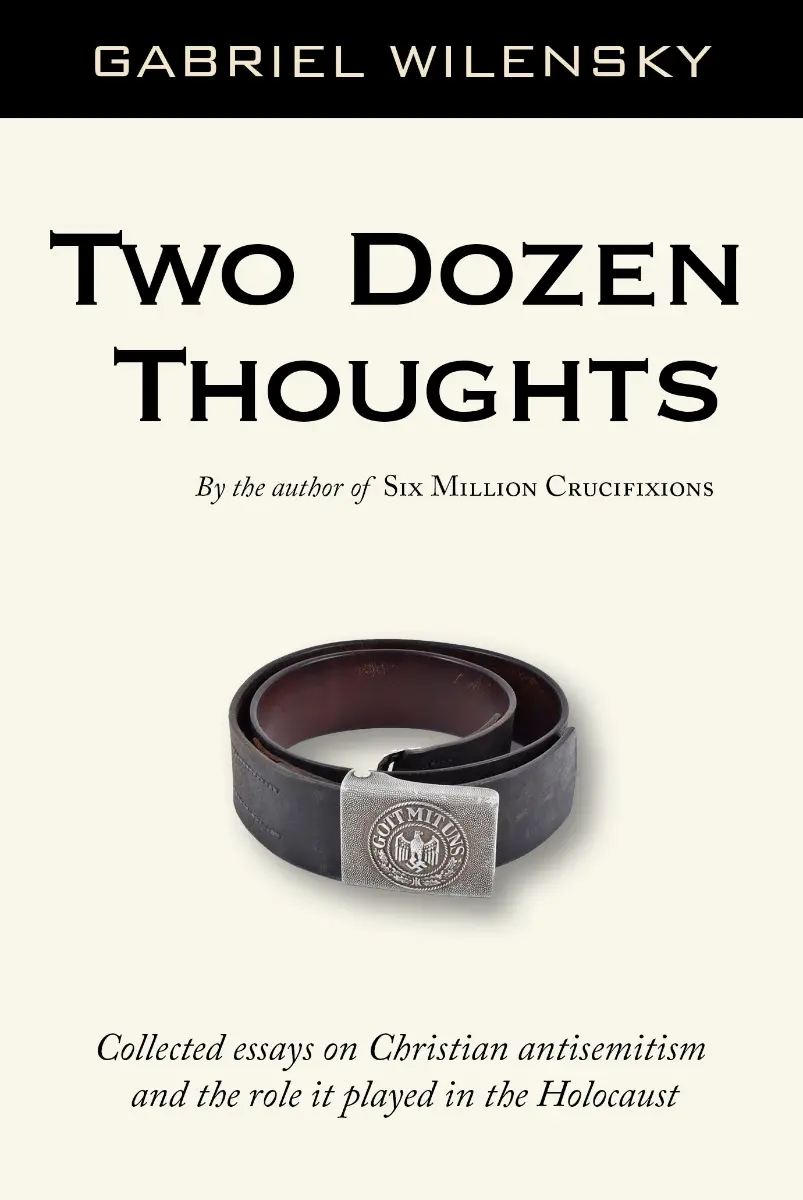
Two Dozen Thoughts
Collected essays on Christian antisemitism and the role it played in the Holocaust
A collection of essays examining Christian antisemitism, the actions and inactions of the churches during and after the Holocaust, and the ideas that helped make mass murder possible. Complementary to Six Million Crucifixions.
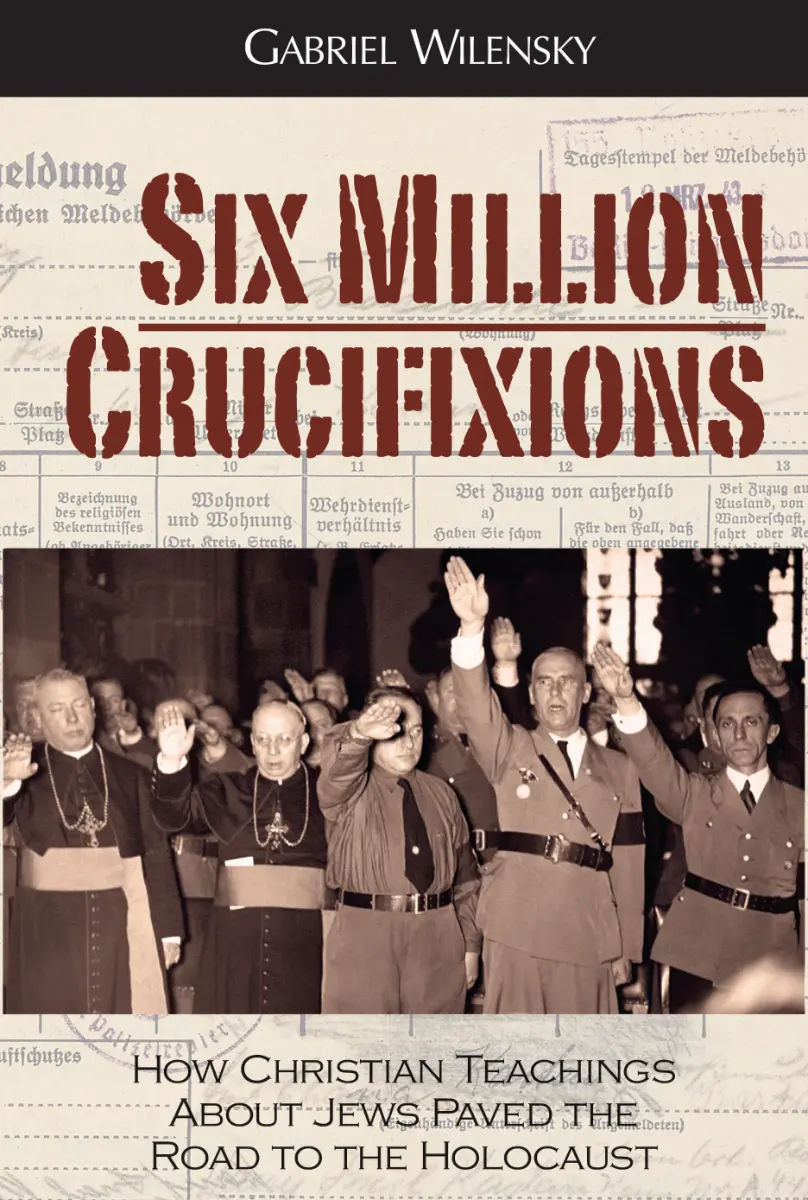
Six Million Crucifixions
How Christian Teachings About Jews Paved the Road to the Holocaust
An examination of the long history of Christian antisemitism and its contribution to the conditions that made the Holocaust possible.
Thought Academy
Think more clearly — and raise kids who do the same
Thought Academy exists to help people become better thinkers — and to help parents raise children who can do the same.
A world in which we apply reason and careful thought to everything we do will be a better world. Understanding critical thinking concepts and mastering reasoning skills makes us more effective in daily life. A world freer of superstition progresses faster. And living by the tenets of a considered philosophy of life leads to a more joyous and purposeful existence.
The same principles apply at home. Children who learn to think independently, question assumptions, and face difficulty with intellectual courage grow into adults who can live more deliberately — and help make the world better in turn.
Thought Academy is built on four essential pillars:
- Critical Thinking — learning how to evaluate information, spot weak arguments, and avoid being misled
- Reasoning Skills — developing the tools of clear, logical thought that improve decisions and communication
- Freethinking — the courage and habit of questioning assumptions rather than accepting them uncritically
- Philosophy of Life — choosing and living by principles that lead to a more deliberate, meaningful life
These are practical skills for two closely related tasks: thinking more clearly yourself, and raising children who can do the same.
Thought Academy offers articles, tools, exercises, and a growing set of resources — including the full parenting series drawn from Primordial Soup for the Mind.
Endorsements
From a few historians, philosophers, and scholars
Gabriel Wilensky’s Six Million Crucifixions is a powerful and passionate indictment of the Vatican for acts of omission and acts of commission, made all the more important by his understanding that individual prelates and Roman Catholic officials did far better than Church leadership. He does not spare Protestant Churches in this indictment, but clearly the full force of his work is directed toward examining once again the role of Roman Catholic Church before, during and after the Holocaust; a topic worthy of analysis and an analyst worthy of the topic.

Michael Berenbaum
Director, Sigi Ziering Institute
In the 21st century you would think it unnecessary to write a book based on the premise that an enlightened society and human progress are both a good thing and dependent on an enlightened citizenry through education in reason, rationality, and critical thinking. But, in fact, those very principles are once again under assault by people who think these ideas lead to racism, misogyny, imperialism, and colonialism. So, Gabriel Wilensky’s new book is at once a welcome counter to this negative trend, and a delightful tutorial on how to think. [on Fuel for Thought]

Michael Shermer
Presidential Fellow, Chapman University; Publisher, Skeptic Magazine
A clearly written and passionately argued indictment of centuries of antisemitism that contributed to Nazi extermination of the Jews. Wilensky has read widely, thought deeply, and writes persuasively in placing the Holocaust into the larger context of the history of Western Christianity. What he concludes is deeply disturbing and must be confronted seriously by scholars and public alike. Six Million Crucifixions is an important book for our—or any—age of religious conflict and intolerance.

Dr. Geoffrey Cocks
Julian S. Rammelkamp Professor of History, Albion College
Christians have often employed semantics to achieve distance from the Holocaust. Centuries of Christian ‘anti-Judaism’ may have been bad, according to this view, but it was ‘racial antisemitism’ which led to the German murder of six million Jews. Gabriel Wilensky walks us through two thousand years of history to reveal the flaws in such a claim. Christian complicity was substantial. By the early twentieth century, too many Christians viewed the persecution of Jews with equanimity, or even with enthusiasm. This is a sobering but important book.

Robert P. Ericksen
Professor of History, Pacific Lutheran University
Gabriel Wilensky has penned a learned, expansive, and idealistic volume in a field where that kind of thinking is sorely needed. Those thinking about the future of education would do well to explore this intriguing volume. [on Fuel for Thought]

Senior Fellow and Director, Education Policy Studies, American Enterprise Institute
How was it possible for one group of people to hate another group virulently enough to slaughter six million of them? Gabriel Wilensky’s answer is disturbing and will evoke controversy. The origins of that hatred, antisemitism, he places squarely in the lap of Christianity, beginning with its earliest teachings about Jews. … This is an indictment that must be confronted. It cannot be ignored or wished away.
Karl A. Schleunes
History Professor, University of North Carolina at Greensboro
Fuel for Thought is erudite and encyclopedic, pointed and provocative. Its aims are well worth consideration. Wilensky’s emphasis on education and enlightenment has much to commend it. I have benefitted from my reading.

John K. Roth
Edward J. Sexton Professor Emeritus of Philosophy, Claremont McKenna College
Gabriel Wilensky reminds us that Hitler did not invent satanic notions about Jews, but rather, built the furnaces of Auschwitz on a foundation of spiritual materials provided centuries earlier, in large part, by the Church. … Six Million Crucifixions is a very informative book.

Senior Researcher, Simon Wiesenthal Center
Some books about the Holocaust are more difficult to read than others. Some books about the Holocaust are nearly impossible to read. Not because one does not understand the language and concepts in the books, not because they are gory or graphic, but because such books are confrontational. They compel us to “think again,” or to think for the first time, about issues and questions we might rather avoid.
Gabriel Wilensky’s book, Six Million Crucifixions: How Christian Antisemitism Paved the Road to the Holocaust is one book I found difficult, almost impossible to read. Why? Because I had to confrontthe terrible underside of Christian theology, an underside that contributed in no small part to the beliefs and attitudes too many Christians – Catholic, Protestant, and Orthodox – had imbibed throughout centuries of anti-Jewish preaching and teaching that “paved the road to the Holocaust.”
As Abraham Joshua Heschel once said, the Holocaust did not begin with Auschwitz. The Holocaust began with words. And too many of those hate-filled words had their origin in the Christian Scriptures and were uttered by Christian preachers and teachers, by Christians generally, for nearly two millennia. Is it any wonder so many Christians stood by, even participated in, the destruction of the European Jews during the Nazi era and World War II?
I recommend Six Million Crucifixions: How Christian Antisemitism Paved the Road to the Holocaust because all of us Christians – Catholic, Protestant, and Orthodox – must think again, or think for the first time, about how to teach and preach the Christian Scriptures – the “New Testament” writings – in such a way that the words we utter, the attitudes we encourage, do not demean, disrespect, or disregard our Jewish brothers and sisters, that our words do not demean, disrespect, or disregard Judaism. I hope the challenge is not an impossible one.
Dr. Carol Rittner
Distinguished Professor of Holocaust & Genocide Studies, The Richard Stockton College of New Jersey
My Story
How I Got Here
Early 1990s
Founded Gryphon Software and created Morph, a pioneering graphics application that sold over a million copies, won multiple awards, and was showcased by Steve Jobs. (Also developed best-selling educational titles including the Aladdin and Lion King Activity Centers.)
1990s–2010s
Spent two decades as a product leader at Qualcomm, GoPro, and other companies, developing and shipping software used by tens of millions of people.
2000s
Conducted years of research into the historical roots of antisemitism and Christian teachings about Jews.
2010
Published Six Million Crucifixions.
2017 onward
Founded Thought Academy to help people become better thinkers and learn how to live well, later adding a companion YouTube channel.
2025
Published Fuel for Thought.
2025
Released the free parenting guide Primordial Soup for the Mind.
Present
Writing How to Fix the United States, continuing the exploration of reason, education, and Enlightenment principles.
F.A.Q.
Popular
Questions
What is Six Million Crucifixions about?
The book examines how nearly two thousand years of Christian teachings about Jews created a deep cultural and theological foundation of hostility. It argues that this long history of contempt helped make the Holocaust possible.
Why did you write Six Million Crucifixions?
I had long wondered how it was possible for people to hate an entire group with such intensity. Once I understood the historical and theological roots of that hatred, I realized others might have the same question. The book is the result of that investigation.
What is Fuel for Thought about?
Fuel for Thought is an exploration of how reason, critical thinking, and better education can help create a more enlightened and humane society. It examines the ideas and reforms needed to move civilization in a better direction.
Why did you write Primordial Soup for the Mind?
I wanted to give parents a practical guide to developing both the intellect and the character of their children — not just teaching them how to think, but helping them become thoughtful, capable, curious, and generally better people. The book is free because I believe this foundation should be widely available.
How can I read Primordial Soup for the Mind?
The book is available free online at Thought Academy. You can read it by section, by theme, or by specific parenting questions.
It is also available as a free download from Apple Books and for $0.99 on Amazon.
What is Thought Academy?
Thought Academy is a platform dedicated to helping people become better critical thinkers and develop a sound philosophy of life. It offers articles, tools, and resources aimed at strengthening reason, independent thought, and the ability to live well.
What are you working on now?
I am currently writing How to Fix the United States. The book examines how the country has diverged from Enlightenment principles and the foundations set by the American Founding Fathers, and provides detailed, practical guidance — essentially a manual — on how to fix it.